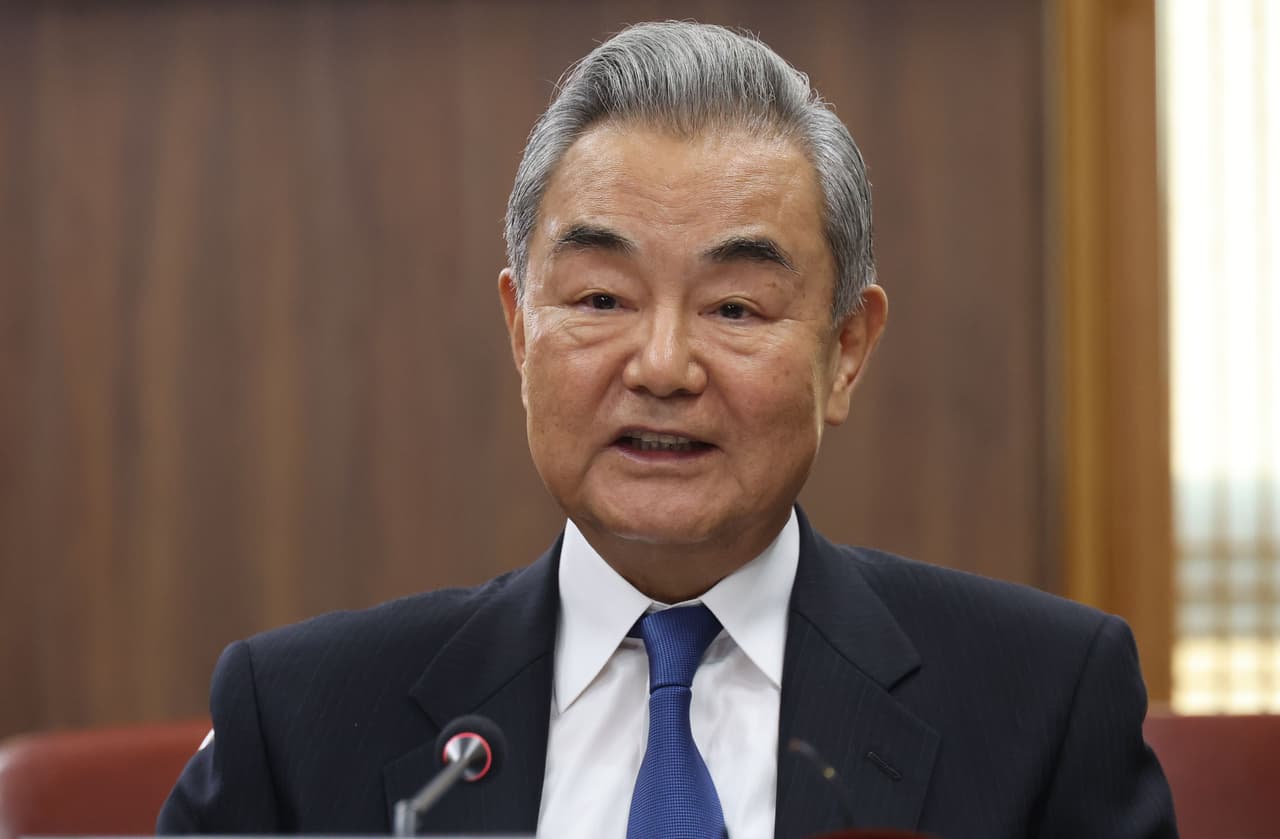
Chinese Foreign Minister Wang Yi recently visited South Korea in a bid to deepen bilateral relations between the two countries. According to a report by SCMP China, the Chinese-language edition of Hong Kong media outlet South China Morning Post, the visit came at a time when certain signs of tension had emerged in the US-South Korea alliance, and Wang Yi's trip has been widely interpreted as an attempt by Beijing to draw closer to this important Northeast Asian neighbor by taking advantage of possible differences between Seoul and Washington.
For China, South Korea is not only an important trade partner but also a key link in the regional security landscape. For years, South Korea has worked to maintain a delicate balance between China and the United States, relying on the security guarantees provided by the US on one hand while maintaining close economic ties with China on the other. This visit by Wang Yi is seen as another attempt by Beijing to further consolidate this economic and diplomatic relationship by taking advantage of changes in the external environment.
According to the report's analysis, the recent cracks in the US-South Korea alliance may stem from differences between the two sides on issues such as trade policy, the sharing of regional security commitments, and how to respond to the situation on the Korean Peninsula. While these differences may not necessarily shake the alliance at its foundation, they do provide China with room for diplomatic maneuvering. Although the specific agenda of Wang Yi's visit has not been fully disclosed, it is widely believed that bilateral economic and trade cooperation, coordination on regional developments, and arrangements for high-level exchanges will all be key topics of discussion.
At the same time, data on China's domestic economy shows signs of slowing growth, which adds another layer of context to this diplomatic move. The cooling of economic growth has made Beijing place greater emphasis on stabilizing its surrounding environment in its foreign relations, so as to ensure that external uncertainty does not further disrupt the pace of domestic economic recovery. Analysts believe that against this backdrop, China is more inclined to hedge against external risks by deepening economic and trade ties with neighboring countries, and South Korea has naturally become one of the key targets of this effort.
It is worth noting that the SCMP report also mentioned another piece of international economic news: remarks made by Kevin Warsh at the Jackson Hole global central bank symposium. As a former governor of the US Federal Reserve, Warsh's remarks have long attracted attention from global markets, especially against the current backdrop of continued divergence in monetary policy paths among the world's major economies. His views could have a certain impact on market expectations, indirectly affecting capital flows into emerging markets, including China.