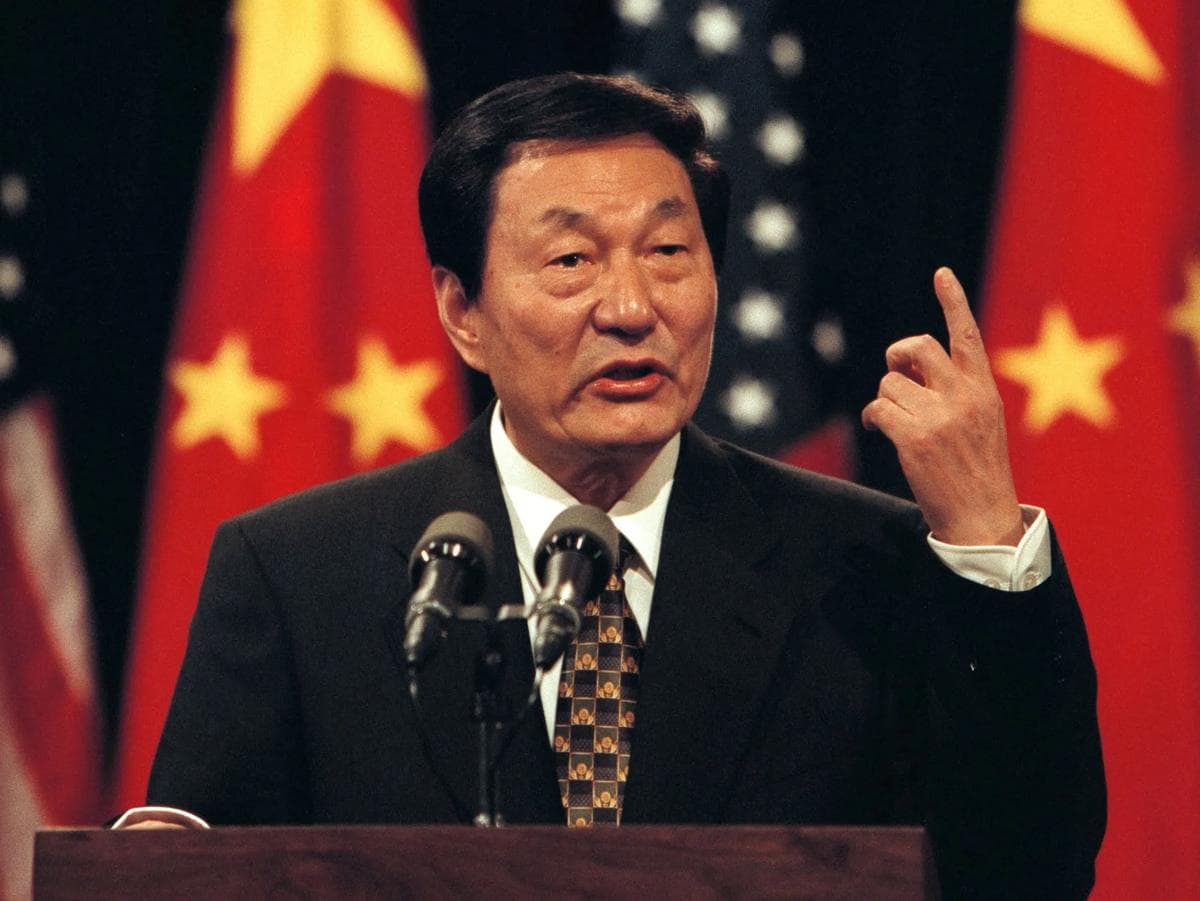
Zhu Rongji, the former Chinese premier who steered China into the World Trade Organization and drove a sweeping set of economic reforms, died in Beijing on August 12, 2026, at the age of 97. According to Xinhua, he died after prolonged illness. Known for his pragmatism and iron-fisted style, Zhu witnessed and deeply shaped a pivotal stage of China's reform and opening-up.
From Shanghai to Zhongnanhai
Zhu was born in October 1928 in Changsha, Hunan province. In the late 1980s he became mayor of Shanghai and later also served as the city's Party chief, governing China's largest economic hub. In the early 1990s he moved to the central government, serving as a vice-premier and, for a time, as governor of the People's Bank of China. Faced with severe inflation, he used forceful measures to stabilize prices, showing a distinctive governing style.
In 1998, Zhu became premier, working alongside then-President Jiang Zemin until he stepped down in 2003. Those years were a crucial period of deepening reform of China's economic system and opening to the outside world.
The reformer at the controls
As premier, Zhu pushed through a series of far-reaching reforms, including the overhaul of state-owned enterprises, a tax-sharing system, the modernization of the financial and banking system, and reforms of housing and government institutions. During the Asian financial crisis of 1997 and 1998, he resisted pressure and pledged not to devalue the yuan, helping to steady the region's economy, and China also weathered the catastrophic floods of 1998.