Times of China
Top News

China-ASEAN Free Trade Area 3.0 Upgrade to Take Effect on December 1

Chinese Premier Li Qiang joins regional leaders in Manila for the ASEAN summit, where Beijing aims to bring the upgraded trade pact into force and deepen cooperation on artificial intelligence, the digital economy and energy security.

By EditorialPublished Updated 1 min read
Share
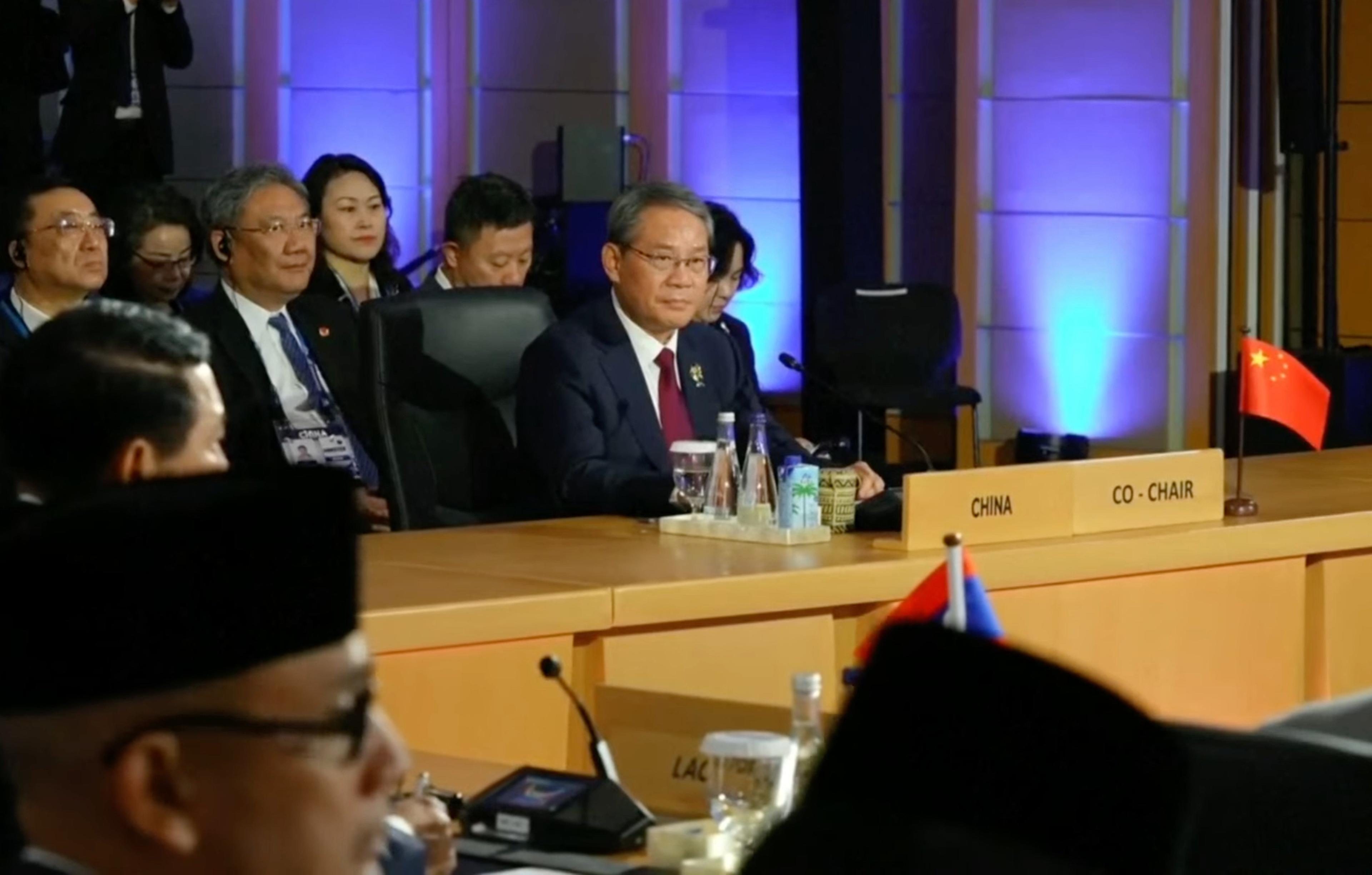
Chinese Premier Li Qiang joins leaders from around the region for talks at the ASEAN summit in Manila on November 16, 2026.
Chinese Premier Li Qiang joins leaders from around the region for talks at the ASEAN summit in Manila on November 16, 2026. · Handout

Chinese Premier Li Qiang is in Manila for the ASEAN summit, joining around 20 leaders including U.S. President Donald Trump and Brazilian President Luiz Inacio Lula da Silva for the bloc's annual gathering.

Beijing hopes to use the meeting to reinforce solidarity and mutual trust with Southeast Asian nations, accelerate the entry into force of the China-ASEAN Free Trade Area 3.0 Upgrade Protocol, and expand cooperation in artificial intelligence, the digital economy and energy security, according to China's foreign ministry.

Trade upgrade takes effect next month

The upgraded trade pact is scheduled to come into force on December 1. Chinese officials say the new protocol will modernise market access rules, strengthen supply chain links and create a more predictable environment for cross-border investment between China and the 10-member ASEAN bloc.

The agreement builds on two decades of economic integration that has made China ASEAN's largest trading partner and ASEAN one of China's most important export and investment destinations. Bilateral trade has grown rapidly despite global headwinds, and both sides are looking to the 3.0 upgrade to keep pace with changes in technology and services trade.
Beyond trade

China is also pitching deeper collaboration on AI governance, digital infrastructure and clean energy. Officials argue that coordinated standards in these areas will help smaller ASEAN economies plug into regional supply chains and attract technology investment without becoming dependent on any single external power.

The summit takes place against a backdrop of heightened geopolitical competition. With Washington pushing its own economic and security initiatives in the Indo-Pacific, Beijing is keen to present itself as a stable, long-term partner for Southeast Asia through concrete economic commitments.

Regional response

ASEAN leaders are expected to welcome the trade upgrade while carefully balancing relations with other major powers. Several member states have deep security ties with the United States and do not want to be forced into an either-or choice between Washington and Beijing.

Li's presence in Manila underscores the priority China places on its southern neighbourhood. For Beijing, a unified and prosperous ASEAN that trades heavily with China is both an economic opportunity and a strategic buffer against attempts to contain its influence.

Tags

  • Li Qiang
  • ASEAN
  • Manila
  • China-ASEAN FTA
  • trade
  • AI
  • digital economy

Read More