Times of China
Top News

China, US and Russia Hold Historic Shenzhen Summit: Three Nuclear Powers Meet

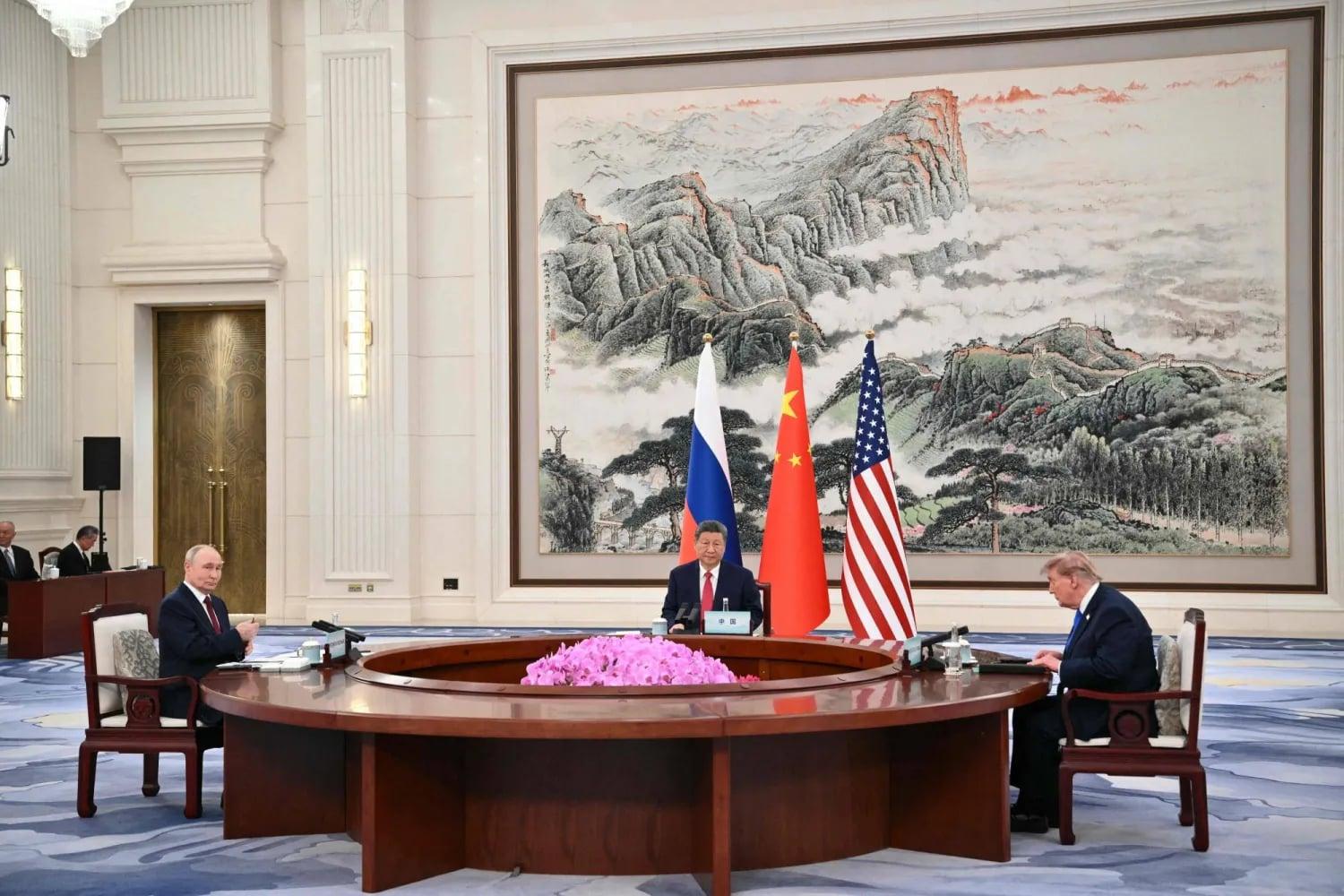
Chinese President Xi Jinping, US President Donald Trump and Russian President Vladimir Putin held their first-ever trilateral meeting at Kylin Villa in Shenzhen on Thursday, discussing the war in Ukraine, nuclear arms control and global strategic stability.

By Alisia BornPublished 1 min read
Share
Chinese President Xi Jinping, US President Donald Trump and Russian President Putin take part in a trilateral meeting at Kylin Villa in Shenzhen
Chinese President Xi Jinping, US President Donald Trump and Russian President Putin take part in a trilateral meeting at Kylin Villa in Shenzhen · Mandel NGAN / AFP

On November 19, 2026, on the sidelines of the APEC Economic Leaders' Meeting, Chinese President Xi Jinping, US President Donald Trump and Russian President Vladimir Putin gathered at Kylin Villa in Shenzhen for their first-ever trilateral summit. The meeting, bringing together the leaders of the world's three largest nuclear powers, was seen by many observers as one of the most symbolic diplomatic scenes since the end of the Cold War.

The leaders sat around a large round table and delivered opening remarks in turn. The atmosphere was solemn and complex. Trump said, "We are really making history. The three of us have a great deal to discuss." Putin said the three countries had "numerous shared interests" in settling regional conflicts, including obviously the conflict in Ukraine. Unlike Trump and Putin, Xi did not mention Ukraine directly, but stressed: "History tells us that when major powers live in harmony, the world is at peace. When major powers clash, the world falls into turmoil."

Nuclear arms control takes center stage

Trump insisted on making nuclear arms control a central topic of the meeting. Although China has long opposed joining US-Russia nuclear talks, arguing that its arsenal is far smaller than those of Washington and Moscow, Trump told Xi and Putin at the start that giving up nuclear weapons was "not an easy thing to do."

The United States and Russia hold the world's largest nuclear arsenals, while China has been accelerating the modernization of its nuclear forces in recent years. Their positions differ sharply: the US and Russia want China to join arms-control discussions, while China argues that all countries should first fulfill existing disarmament obligations and opposes unilateral pressure.

Ukraine and Iran remain unresolved

The war in Ukraine was an issue Putin wanted to discuss in depth. The Kremlin said Putin and Trump had held bilateral talks before the trilateral meeting, during which they discussed the Ukraine situation, and that Putin left the talks "in an excellent mood." However, Ukraine and major European countries were not part of the trilateral, raising questions about the legitimacy of any negotiation.

Trump also noted that he and Xi felt strongly about the security of oil shipments through the Strait of Hormuz, which had been disrupted by the Iran war. The interests of the three powers in the region are complicated and intertwined.
Signals behind the diplomatic protocol

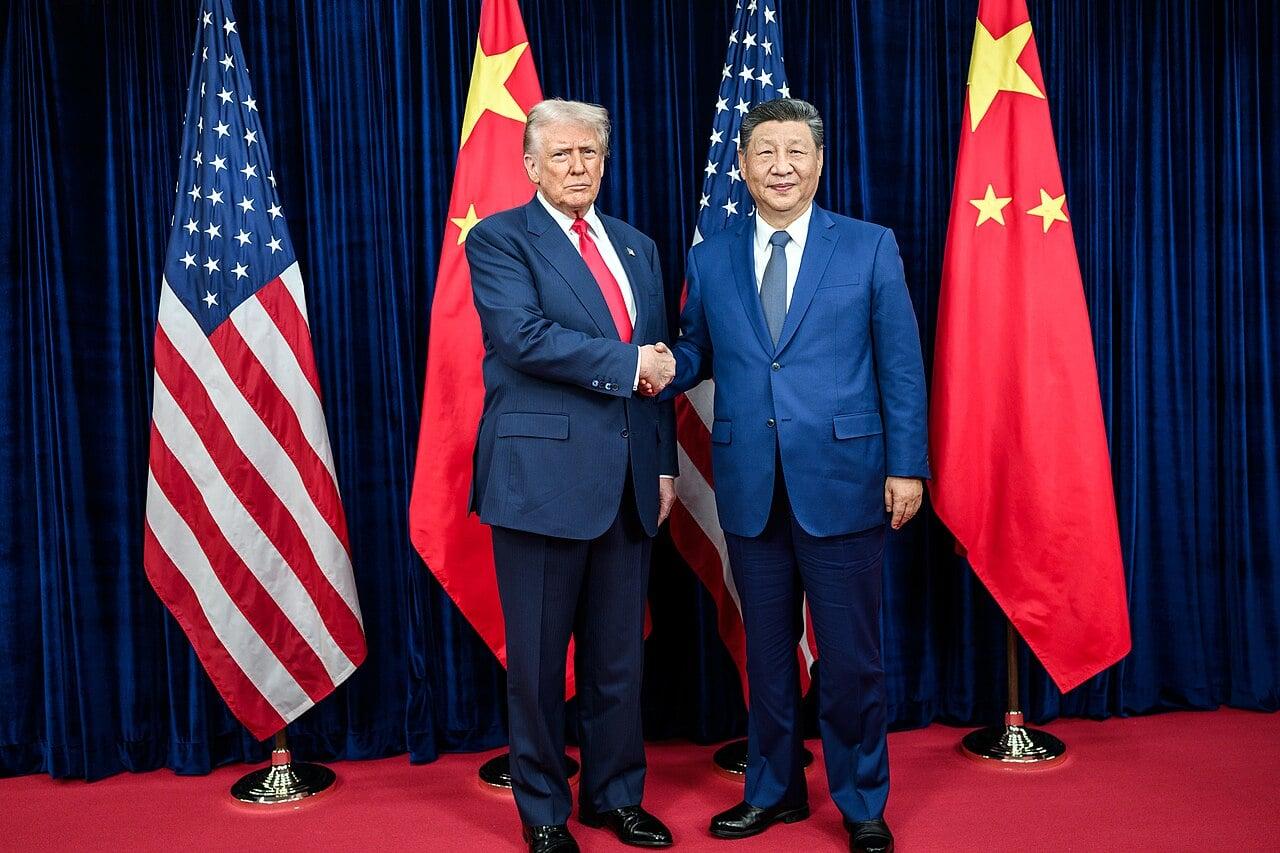
The diplomatic arrangements for the meeting also sent subtle signals. Xi personally went to Shenzhen airport to greet Trump, the first time he had done so for any visiting leader since becoming president. Trump told the media that the reception included "thousands of people, young children, soldiers and magnificent ceremonies" and represented "great respect" for the United States.

By contrast, the arrival ceremonies for Putin and Japanese Prime Minister Sanae Takaichi were more subdued. Takaichi, whose earlier remarks on Taiwan had strained Sino-Japanese relations, appeared isolated at the summit.

Symbolism outweighs concrete results

Analysts generally believe the trilateral is more likely to produce photographs and statements than breakthrough agreements. The three countries are deeply divided over Ukraine, Iran, nuclear weapons, trade and China's military buildup. Yet the mere image of the three leaders together is enough to reshape the global power narrative.

For the United States, the meeting was an opportunity for Trump to demonstrate diplomatic influence. For China, it was a stage to confirm its role as a global power broker. For Russia, at a time of setbacks on the Ukrainian battlefield, sitting as an equal with the leaders of the United States and China was itself a strategic victory.

What comes next

Whether the three countries can establish a sustained dialogue mechanism on arms control, trade and regional security remains to be seen. Many European and Asian nations worry that trilateral US-China-Russia interaction could sideline the interests of smaller countries.

Either way, the Shenzhen summit has already left its mark on international history. It is a reminder that in a multipolar world, every encounter between three nuclear powers carries both risk and the possibility of stability.

Tags

  • 习近平
  • 特朗普
  • 普京
  • 中美俄
  • 深圳
  • APEC
  • 核军控
  • 乌克兰
  • 外交
  • Xi Jinping
  • Donald Trump
  • Vladimir Putin
  • China
  • US
  • Russia
  • Shenzhen
  • APEC
  • nuclear arms control
  • Ukraine

Read More