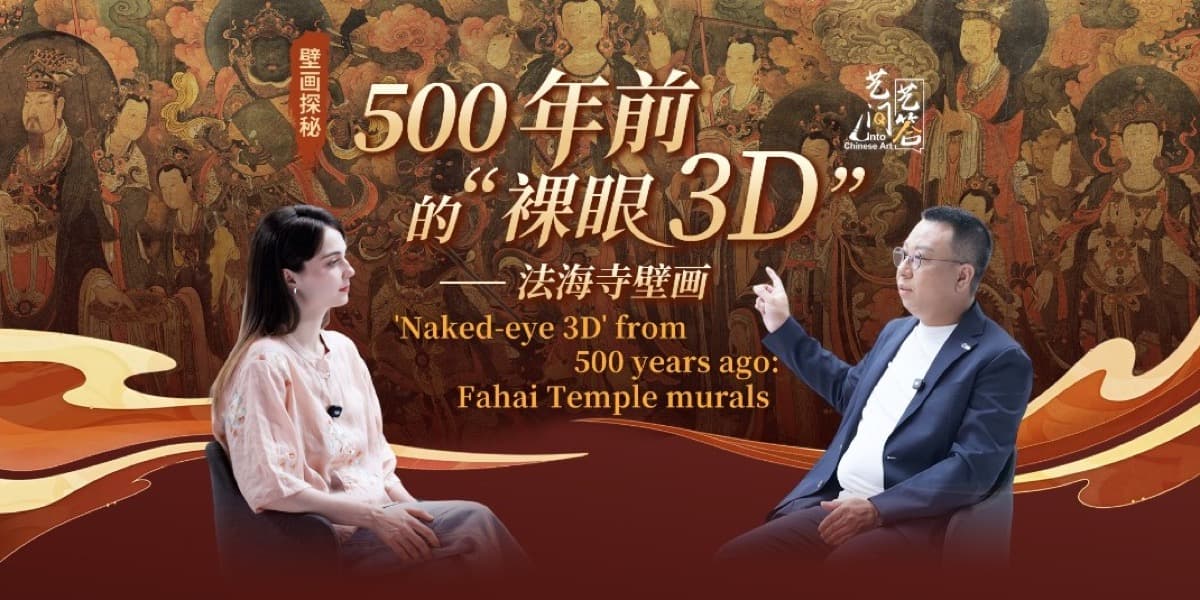
Mural painting is where painting began. With its long, distinct tradition, Chinese mural art unfolds like a history of painting written across walls. In the latest episode of the interview series Into Chinese Art, Alina Efimova, a Russian cultural observer with a deep interest in Chinese murals, sat down with Dong Zhuo, vice dean of the School of Restoration at the Central Academy of Fine Arts, for a cross cultural conversation exploring why the murals at Fahai Temple stand out for their refinement among China's vast mural tradition, where the naked-eye 3D quality netizens describe comes from, and what produces the faint halo of light that seems to hover over parts of the paintings.
A pinnacle of Ming dynasty court mural art
The Fahai Temple murals date to the Ming dynasty, between 1368 and 1644, and are located in western Beijing, widely regarded as one of the defining works of Ming court mural painting. The murals make extensive use of traditional techniques including gold thread relief and mineral pigments, and centuries later still retain vivid color and remarkably fine linework, down to the folds of clothing, strands of hair and the details on the crowns of Buddhist figures. That level of preservation has long made the Fahai Temple murals a key reference point for scholars and enthusiasts of ancient Chinese mural art, and such completeness is rare among murals from the same period.