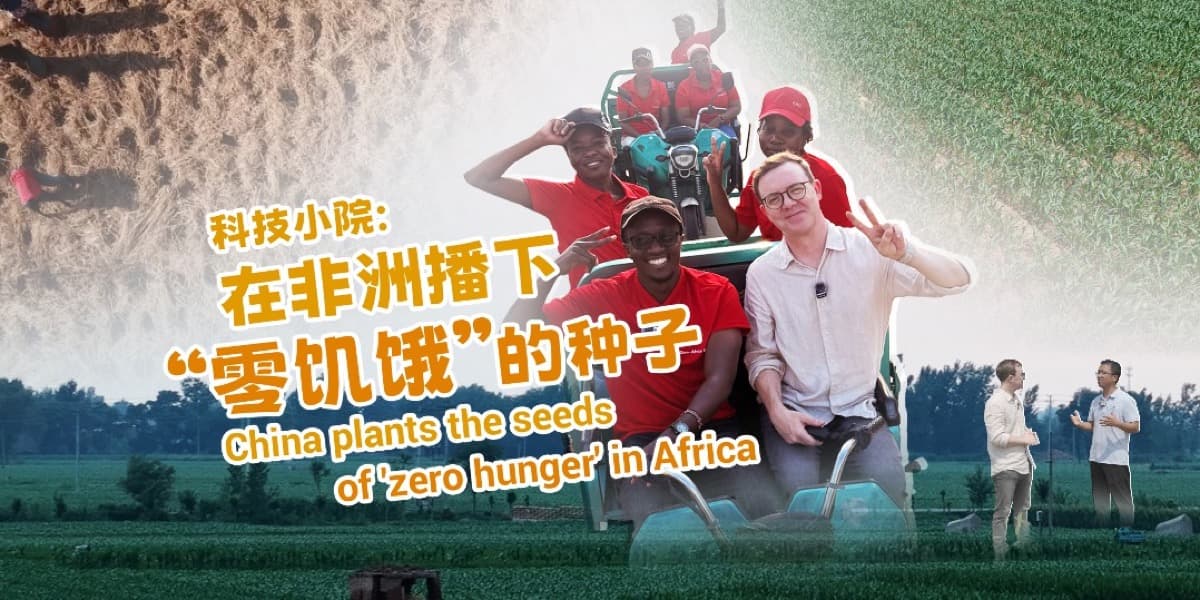
In Quzhou county, in North China's Hebei province, a group of students from Africa are living, working and eating alongside local farmers. They spend their days learning to drive tractors and take soil samples, searching this stretch of northern Chinese farmland for practical solutions to the food security challenges they will face back home.
From Quzhou to the Global South
The program, known as the Science and Technology Backyard, was launched by China Agricultural University to pass on China's accumulated agricultural knowledge and techniques through hands on, on the ground training, planting the seeds of the zero hunger goal in the soil of countries across the Global South. Since it was first set up in Quzhou in 2009, the model has expanded from a handful of pilot sites to provinces across the country, and has more recently begun reaching overseas, with Africa emerging as one of its key destinations.
A classroom in the fields
Students taking part in the program spend their days working the land alongside local farmers, picking up specific techniques for crop management and field work, and their evenings comparing notes with Chinese students and faculty. Learning by doing in this way keeps the agricultural knowledge from staying purely theoretical, tying it instead to concrete practices students can take back and apply at home. China Daily reporter Owen Fishwick visited the program on the ground, documenting how these international students are turning what they learn in Quzhou into approaches for tackling food security challenges in their own countries.
For many of the African students taking part, the value of the experience lies not only in the farming techniques themselves, but in seeing firsthand a model that links researchers, students and ordinary farmers together, a structure that sets the Science and Technology Backyard approach apart from more conventional agricultural aid programs. As more international students finish their time in Quzhou and head home, the seeds planted in this corner of rural China are being carried to more of the places that need them.