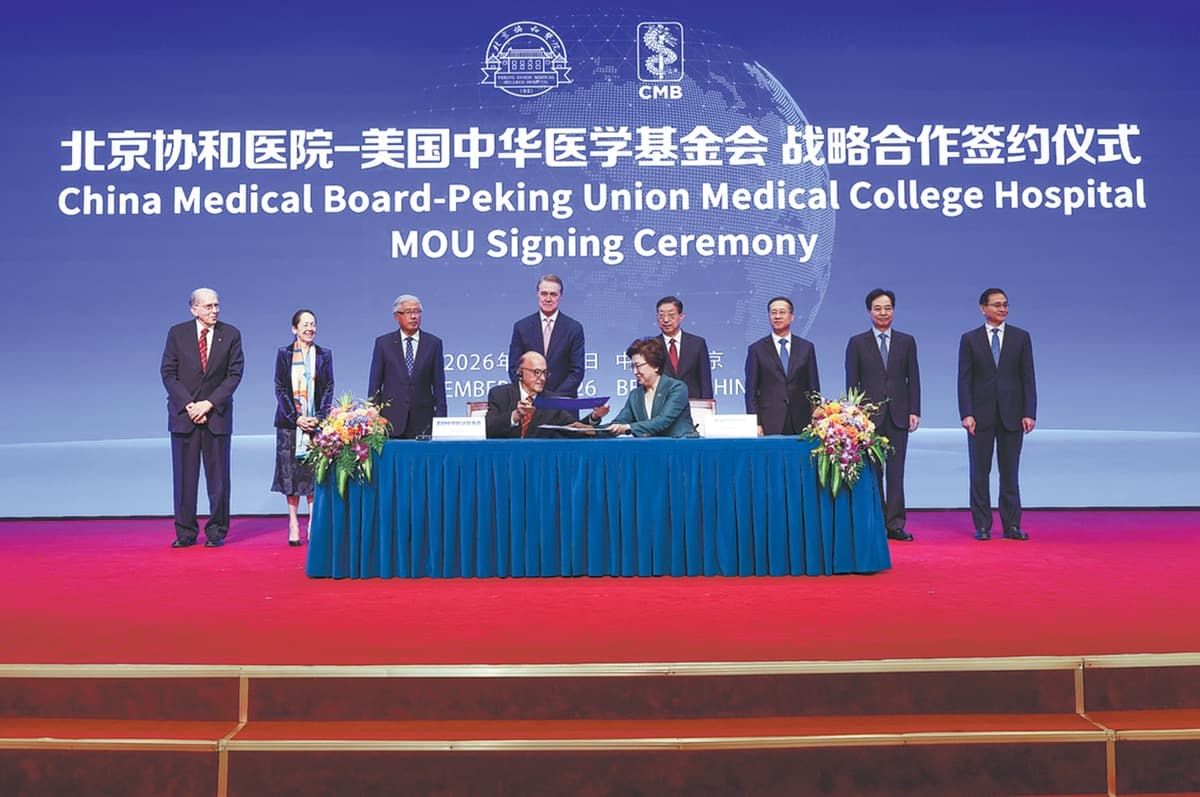
Chinese and US officials and health experts have called for deeper health cooperation between the two countries, saying medicine and public health can serve as a durable platform for the shared goal of promoting human wellness. The remarks came at an event Thursday in Beijing marking the 105th anniversary of Peking Union Medical College Hospital, where the hospital and the US-based China Medical Board signed a third five-year cooperation memorandum.
Half a century of health cooperation
Vice-Foreign Minister Ma Zhaoxu said that for more than half a century, China and the United States have cooperated across a wide range of health related areas, including health policy, emerging and known infectious diseases, chronic disease prevention and treatment, medical research and clinical care technology, and that the two countries had also worked closely together fighting the Ebola outbreak and addressing global health challenges. He said the cooperation had produced fruitful results through mutual effort, and that as new global health challenges emerge, the two sides are expected to further strengthen health dialogue and medical education exchanges, encourage visits among physicians, scholars and students, and deepen cooperation in areas such as infectious disease response and cancer management.
A history intertwined with US medicine
Peking Union Medical College Hospital, known as PUMCH, was founded in 1921 by the US based Rockefeller Foundation through its China Medical Board and is one of the most prestigious hospitals in China. Zhang Shuyang, the hospital's president, said its development has been closely intertwined with the US medical, health and science sector, with a number of American medical experts who practiced and taught there contributing to its growth through their work, experiences that in turn became a highlight of their own careers. She pointed to Oswald Hope Robertson, an English born American medical scientist who established the world's first blood bank during World War I, as an example, noting that he later served as the hospital's second director of internal medicine, made pneumonia a focus of research there, and continued working in that field after returning to the United States. She also noted that after China and the United States established diplomatic relations, the first nongovernmental academic delegation to visit the US from China was a medical delegation.