
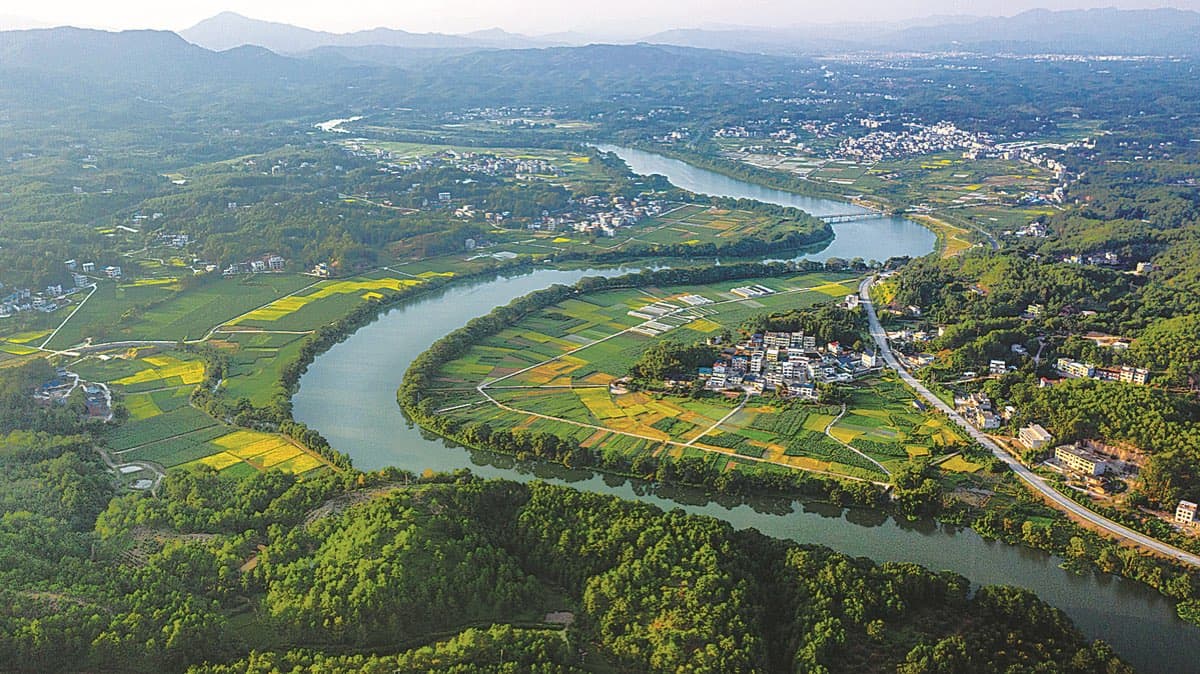
It is hard to imagine that this land of green fields and a winding river was once a stretch of barren, crimson hills. In Changting, Fujian province, decades of persistence have turned a place of severe soil erosion into green hills and clear waters where trees grow thick and birds return. Behind that transformation are consistent governance and a people-first approach to development.
From barren red hills
Changting's red soil comes from granite. It is loose, lacks organic matter, and can hold neither water nor nutrients. After decades of over-logging, the topsoil washed away and the hills were left bare. By 1985, soil erosion covered 97,467 hectares, close to a third of the county's total area. In summer, the exposed ground could reach 60 to 70 degrees Celsius, crops struggled to grow, rivers silted up, and rural communities fell into poverty.
Bringing the mountains back to life
Restoration was not easy. Ma Xuemei, a local farmer, was among the first to plant trees on the hills. She recalled that the mountain looked lifeless at the time, and that people said she was wasting her time. She and her neighbors worked out a method: first planting fast-growing Bahia grass to bind the soil, then gradually adding shrubs and trees to stabilize the steep slopes bit by bit. As she put it, they grew grass and planted trees because they wanted the mountain to live again.