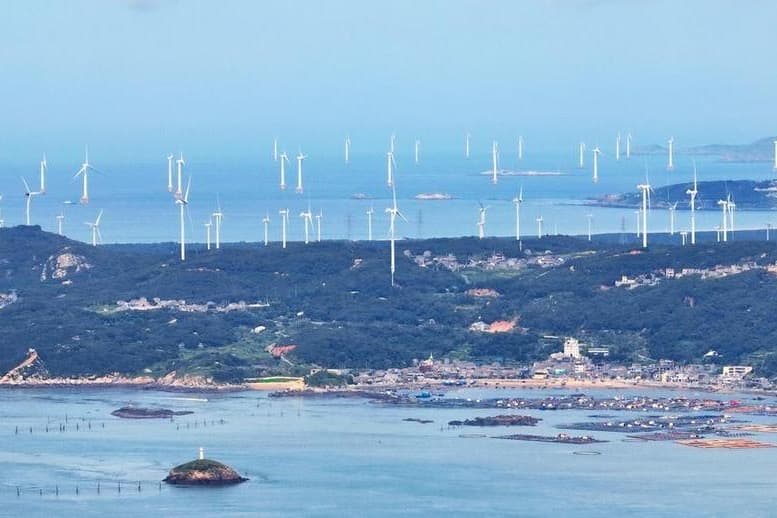
China's National Development and Reform Commission and National Energy Administration have jointly issued the 15th Five-Year Plan for Renewable Energy Development, covering 2026 to 2030. It makes wind and solar the main engines of the country's energy transition over the next five years, pushing renewables from sheer expansion toward high-quality growth and a larger role in replacing fossil fuels.
The blueprint sets out a clear line. It aims to keep growing the volume of clean energy while also solving how that power gets delivered steadily and absorbed effectively, so that new energy is not only installed but genuinely used well.
A set of targets for 2030
Under the plan, by 2030 China's annual renewable energy consumption should reach about 1.8 billion tonnes of standard coal equivalent, total installed renewable capacity should reach about 3.5 billion kilowatts, and annual generation should be around 6 trillion kilowatt-hours. Combined wind and solar capacity alone is expected to exceed 2.8 billion kilowatts.
In terms of share, renewables such as wind and solar are expected to make up more than 50 percent of the country's total installed power capacity, and more than 30 percent of annual electricity output. That marks a move from being a supplementary source toward becoming the mainstay of power supply.
From capacity to reliability
Beyond scale, the plan puts weight on reliability. By 2030 the average firm-capacity ratio for wind and solar paired with energy storage is set at around 8 percent. During evening hours at the peak of summer and winter demand, new energy is meant to supply more than 20 percent of electricity, about 10 percentage points higher than before.
To support that, the plan calls for adding more than 300 million kilowatts of peak-shaving capacity within five years, and for strengthening the grid's balancing ability through multi-energy integration, pumped-storage hydro and virtual power plants, easing the strain that the intermittent nature of wind and solar creates.
From chasing scale to chasing quality
For years the keyword of China's new-energy growth was rapid expansion, and its installed capacity has long ranked among the world's largest. With the question of volume largely settled, the core task of the new stage is to improve utilization, cut curtailment of wind and solar, and get green power to where it is actually needed.
The plan writes that shift into its blueprint, and puts the hard parts on the table too. The higher the share of clean energy, the more it demands of grid flexibility and storage. Whether China can expand clean energy over the next five years while holding the power system steady will be the real test of how well this plan delivers.