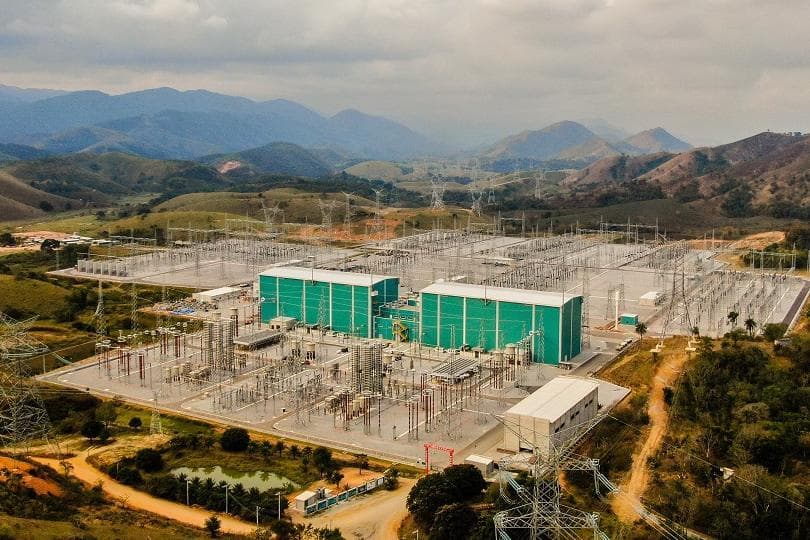
From an ultra-high-voltage transmission line in Brazil to a solar park high in the Andes, Chinese companies are deepening energy cooperation with Latin America through ultra-high-voltage, digital and clean-energy technologies, powering a green transition for the Global South. Behind these projects is a shift from simply investing capital toward exporting technical standards and management expertise.
Moving power from north to south
Brazil faces a classic spatial mismatch. The Amazon basin, rich in hydropower, lies in the north, while demand from industry and households is concentrated in the southeast, in cities such as Rio de Janeiro. Delivering clean hydropower to those demand centers makes long-distance, low-loss transmission essential.
The Belo Monte Phase II project, invested in and operated by State Grid Corp of China, is one answer to that challenge. The ultra-high-voltage direct-current line runs 2,534 kilometers, under a 30-year concession. A senior engineer at the State Grid Energy Research Institute said the project sets a global paradigm for cross-regional clean-energy transmission and proves the safety, maturity and global applicability of China's ultra-high-voltage grid technologies.
Renewing older plants
In Brazil, Chinese firms are not only building new projects but also upgrading existing ones. CTG Brasil operates the Jupia and Ilha Solteira hydropower stations under a 30-year, roughly 3.7 billion US dollar concession, with a combined installed capacity of nearly 5 million kilowatts, supplying power to more than 6 million people each year.