Times of China
Business

China Extends US Tariff Suspension to Stabilize Bilateral Trade

China has extended the suspension of additional tariffs on some US imports and eased unreliable-entity measures against selected US entities, a move analysts say should improve business confidence amid tense bilateral ties.

By EditorialPublished Updated 1 min read
Share
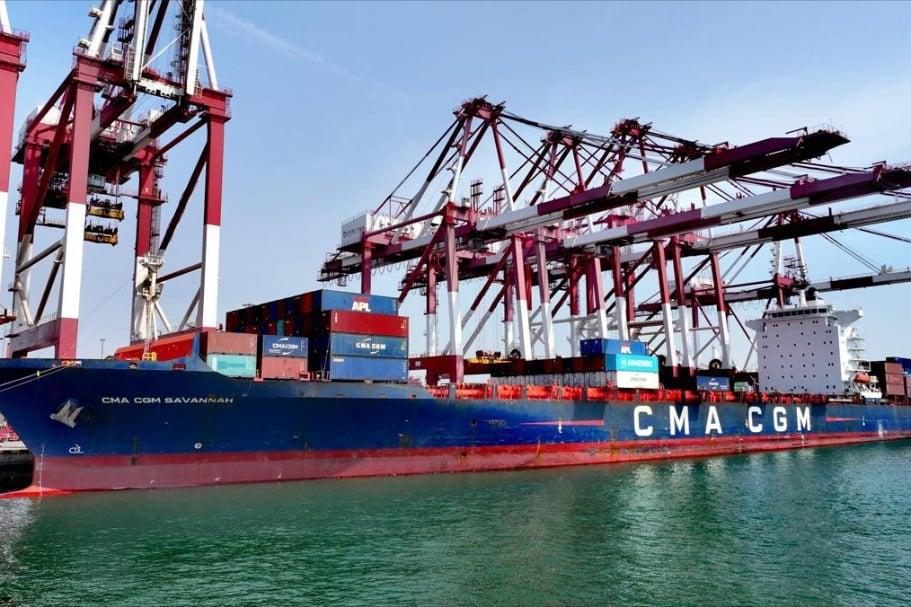
Shipping containers at a port in China.
Shipping containers at a port in China. · China Daily

China has moved to keep trade tensions with the United States from escalating further, announcing that it will extend the suspension of an additional 24 percent tariff on US imports for another two months while keeping a 10 percent additional tariff in place. The decision, which takes effect on Tuesday, is aimed at giving businesses on both sides more certainty as they plan investment and sourcing decisions.

Beijing also said it will extend for two months the suspension of measures against 11 US entities on its unreliable entity list and export restrictions on dual-use items involving 16 other US entities. Companies that want to do business with the listed entities can apply for approval, the Ministry of Commerce said, adding that qualifying applications will be approved.

Watching Washington's next steps

The Customs Tariff Commission of the State Council said China has noted repeated US statements about plans to replace tariffs imposed under the International Emergency Economic Powers Act with tariffs under Section 301 of the US Trade Act of 1974. The Supreme Court struck down the IEEPA tariffs, and Beijing said it will closely monitor what Washington does next and adjust its own countermeasures accordingly.

The announcement suggests Beijing is leaving room for negotiation rather than reacting with immediate tit-for-tat measures. Analysts said the approach is intended to stabilize bilateral trade ties and prevent further disruption to companies already grappling with volatile energy costs and shifting supply chains.

Analysts see a confidence boost

Fu Suixin, an associate researcher at the Chinese Academy of Social Sciences' Institute of American Studies, said greater policy stability would help businesses on both sides make longer-term decisions amid global supply chain adjustments. Zhao Minghao, a professor at Fudan University's Center for American Studies, said sustained high-level dialogue and effective communication could help the two countries manage disputes and keep economic ties more predictable.


Despite persistent friction, trade data show the economic relationship remains significant. In the first three quarters of 2026, China-US goods trade rose 4.1 percent year-on-year to 3.18 trillion yuan, or about $476.5 billion, according to the General Administration of Customs.

Businesses welcome predictability

Chinese exporters and US farmers alike said the moves offer welcome clarity. Wang Ruibin, chairman of Ningbo Sibranch Microelectronics Technology, said tariff adjustments provide greater pricing certainty for businesses in both countries. His company imported nearly 4 million yuan worth of silicon wafers in the first 10 months of 2026, with US-made products accounting for nearly 60 percent of those imports.

At the China International Import Expo in Shanghai, Jeffery Fay, senior vice-president at US audio technology company Harman International, said China remains central to the group's global strategy as both a consumer market and an innovation hub. Christopher Eck of the Indiana Soybean Alliance said greater predictability in Chinese purchases is encouraging for US farmers facing rising production costs.

What comes next

The extensions do not resolve the underlying disputes between the world's two largest economies. They do, however, create a short window in which businesses can operate with less fear of sudden tariff hikes. Much will depend on whether Washington follows through with its stated plans and how Beijing responds once the two-month period ends.

For now, the message from Beijing is that it prefers managed stability to rapid escalation. In an uncertain global economy, that may be enough to keep a fragile trade relationship from deteriorating further.

Tags

  • 中国
  • 美国
  • 关税
  • 贸易
  • 中美经贸
  • 双边关系

Read More